

Designed and conceptualised a tracking platform
for stakeholders to track their hardware, production
and consumption volumes of spirits
Role
UI Designer, UX Researcher
Scope
End-to-end enterprise platform
redesign
Impact and Focus
Unified operations from 3 apps
into 1 for 19+ partners through
asset tracking, workflows and
onboarding
ecoSPIRITS is a sustainable technology company where its main focus is to reduce single-use glass in the spirits industry. One of its core hardware - the ecoTOTE (1.75L or 4.50L glass canister), enables reusable packaging for spirits, significantly reducing waste and carbon emissions.
CircularONE is a B2B enterprise platform designed to track and manage hardware assets across a supply chain ecosystem serving 19+ partner organisations.
This case study explores how we addressed asset tracking challenges and operational inefficiencies through a user-centered redesign of the CircularONE platform.
As an early-stage startup, scaling operations across fragmented software tools exposed two major vulnerabilities that threatened long-term financial stability:
Subscription & Software Overhead
- The ecoSPIRITS Operations team and stakeholders were relying on 3 separate third-party software applications to perform daily tasks. Maintaining 3 distinct app subscriptions, payment portals, and integration channels consumed critical operational budget and created fragmented data.
Direct Financial Loss via Unprotected Assets
- ecoTOTEs operate on a 1-for-1 replacement model with B2B clients. Because field operators lacked visibility into the last-known location and real-time status of physical ecoTOTEs, missing assets resulted in unrecoverable inventory loss that directly drained the company's capital.
Consolidate 3 legacy tools into a single, scalable enterprise platform that guarantees fleet protection, streamlines multi-partner onboarding, and enforces strict data privacy without disrupting active supply chain operations.
Navigating real-world delivery friction under tight timeline and team parameters.
Fixed Timeline & Pre-Defined Scope
Joined in April with an unmovable September/October release deadline. Requirements had been gathered prior to onboarding.
Early-Career Context
Operating as the sole UX Designer in my first corporate design role, while navigating complex supply chain workflows.
Multi-Stakeholder Data Privacy
B2B partner entities accessing a shared database requiring zero cross-partner data visibility
Focused on Essential Day-to-Day Workflows
- Workflows such as Partner Creation, User Creation, Role Creation, Hardware Registration, Allocation, and Filling were critical for stakeholders. These were designated as top priority, while secondary UI enhancements were deferred to post-launch sprints.
Direct Internal Feedback Loops
- Replaced isolated feedback channels with direct cross-functional alignment between the Operations Team and the Technical Project Manager.
Role-Based Access Control & Data Partitioning
- Designed a Role-Based Access Control (RBAC) permission structure with audit trails to enforce privacy across multi-stakeholder accounts.
To ensure earlier requirement gathering reflected actual ground reality, I conducted user interviews with our internal Operations Team to uncover user needs and behavioural patterns. I identified five primary user personas:
Persona #1: Brand Owner
Interested in tracking how much of their owned spirit has been filled and consumed over time.
Persona #2: Licensed Operator
Manages and logs the filling of ecoTOTEs with spirits
Persona #3: Distributor
Handles the logistics, allocating filled ecoTOTEs and transporting them to venue partners
Persona #4: Venue Partners
Operates one or more venues and interacts directly with consumers; needs to track delivery and consumption.
Persona #5: ecoSPIRITS Team Members
Manages overall inventory and ensures all ecoTOTEs are accounted for within the closed-loop system
We synthesised user interviews using affinity mapping to identify core pain points:
Tool Fragmentation
- Users operated across multiple platforms, making it difficult to get a unified overview. The redesigned platform needed to consolidate these functions seamlessly.
Low Navigation Clarity
- The legacy interface left users uncertain about accessing inventory fleet tracking or production/consumption metrics.
Inventory Blind Spots
- There was no reliable way to track the current inventory of ecoTOTEs across different locations and stakeholders.
Strict Permission Needs
- Role-based access was essential. Hardware owners required full lifecycle data, while receiving partners needed visibility only during active allocation windows
Onboarding Friction
- Users needed a streamlined onboarding process with minimal steps for core tasks.
Based on research insights, the redesigned CircularONE platform required three core capabilities.
Unified Enterprise Architecture
- Consolidate 3 tools into 1 platform to provide a real-time operational overview.
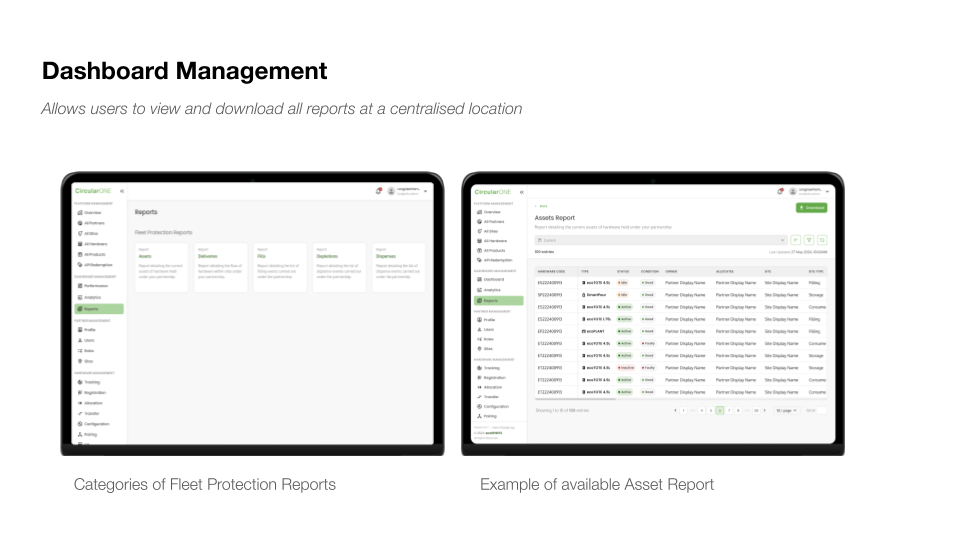
End-to-End Fleet Protection & Asset Traceability
- Track full hardware lifecycles (Registration > Allocation > Filling > Depletion) with automated alerts for assets dormant for more than 90 days
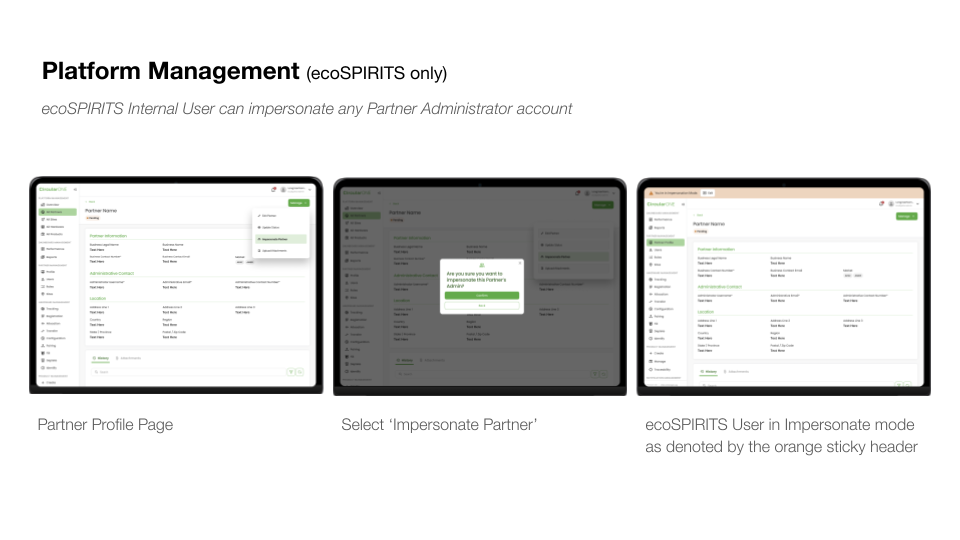
Enterprise Governance & Partner Impersonation
- Build RBAC permission controls that allow system super-admins to impersonate partner views for troubleshooting while restricting B2B clients to their own operational data
These are the main features of CircularONE and the Team has decided to split them into 3 different MVPs.
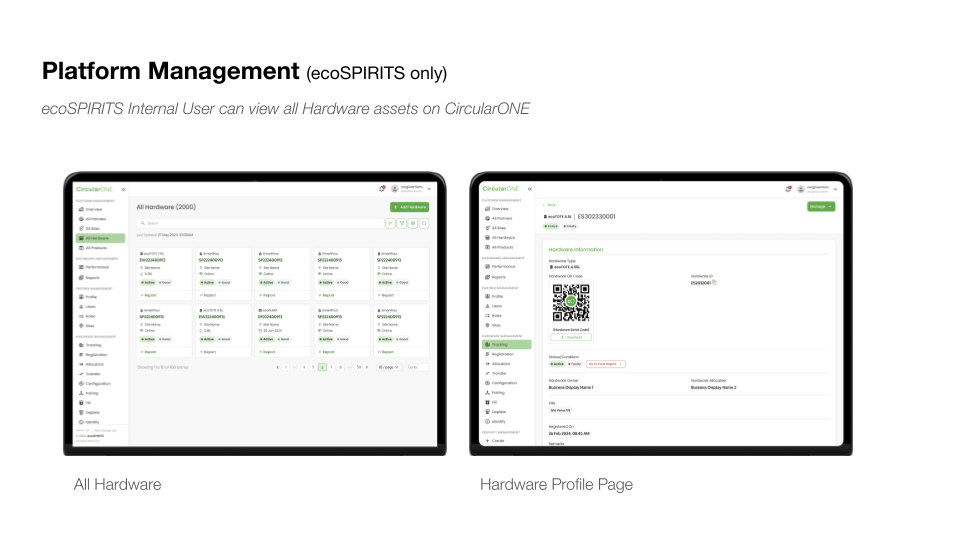
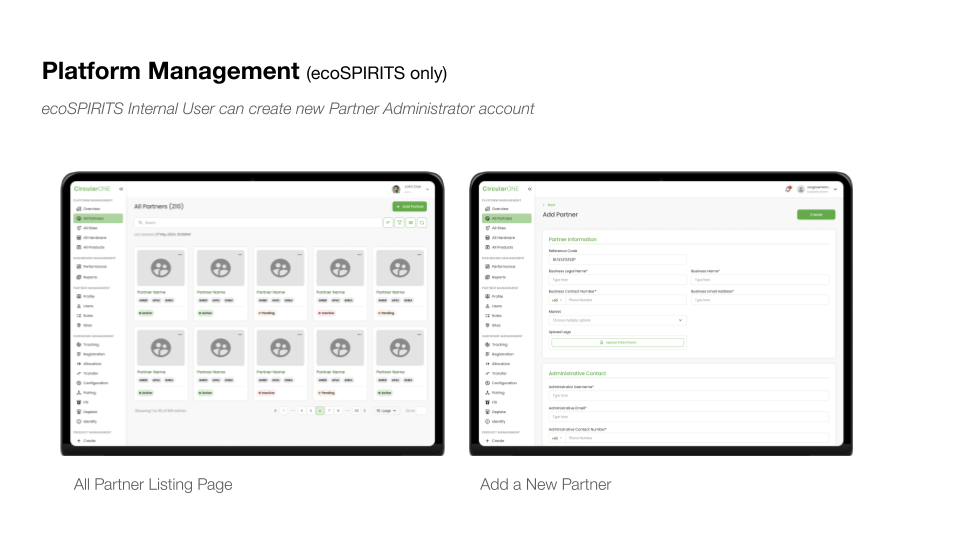
Platform Management (ecoSPIRITS only)
- Full tracking of hardware, products, and partners, plus partner impersonation for troubleshooting.
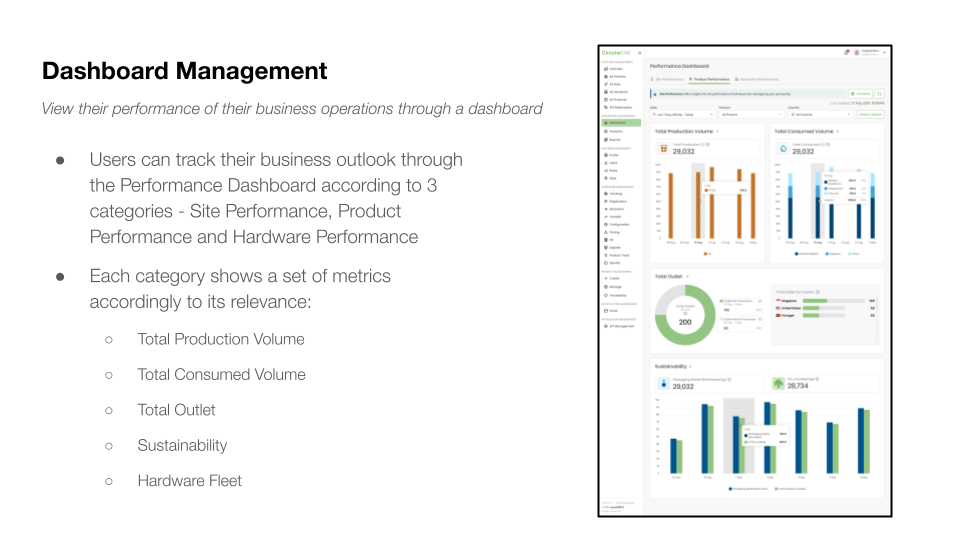
Dashboard Management
- Visual indicators for hardware inventory, spirit volume metrics, and predictive analytics.
Partner Management
- User/role management with permission controls and intuitive user administration UI.
Hardware Management
- Lifecycle tracking (Registration, Allocation, Transfer, Configuration, Filling, Depletion), status indicators, and audit logs.
Product Management
- Product data creation and batch traceability for quality control and recalls.
Notification Management
- Automated email notifications triggered by specific system events.
Integration Management
- API management portal for external system integrations with usage monitoring and error logs.
I mapped key user flows using Lucidchart and Figma to ensure intuitive navigation without compromising development feasibility. Each flow was reviewed collaboratively with the Technical Project Manager and Head of Operations to validate technical constraints. Once approved, I translated these flows into low-fidelity wireframes before collaborating with Agile Labs to produce high-fidelity versions.
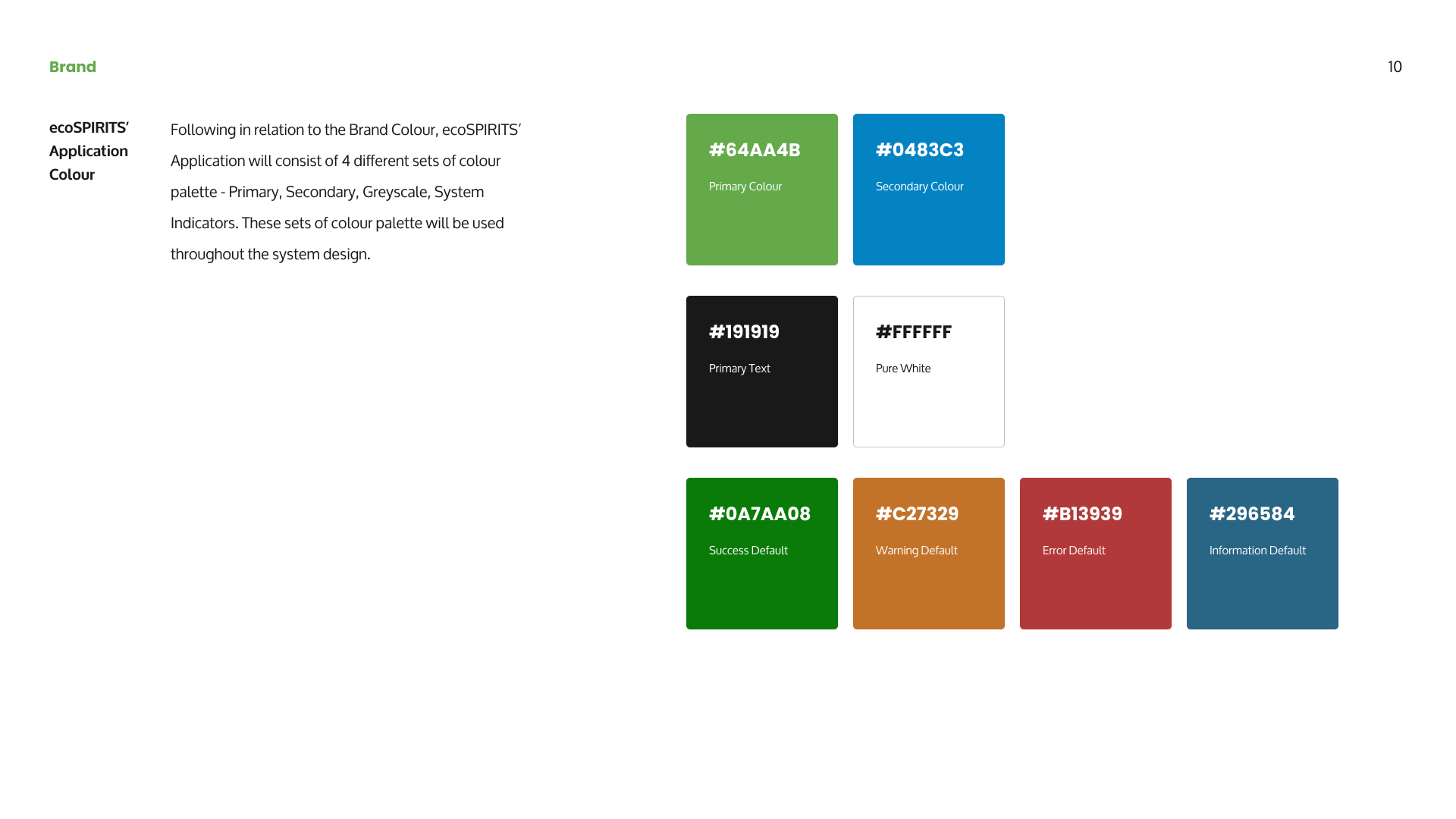
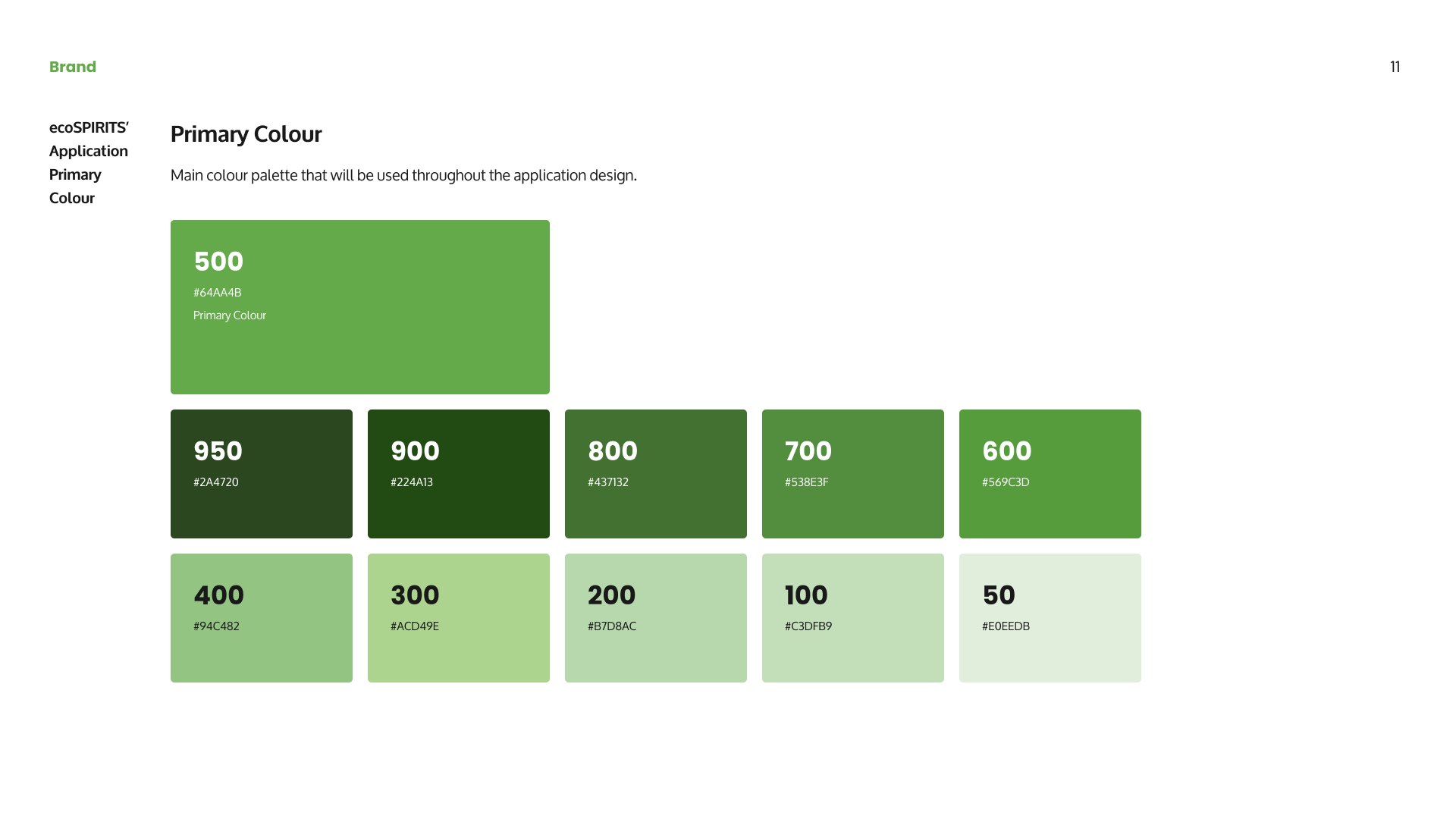
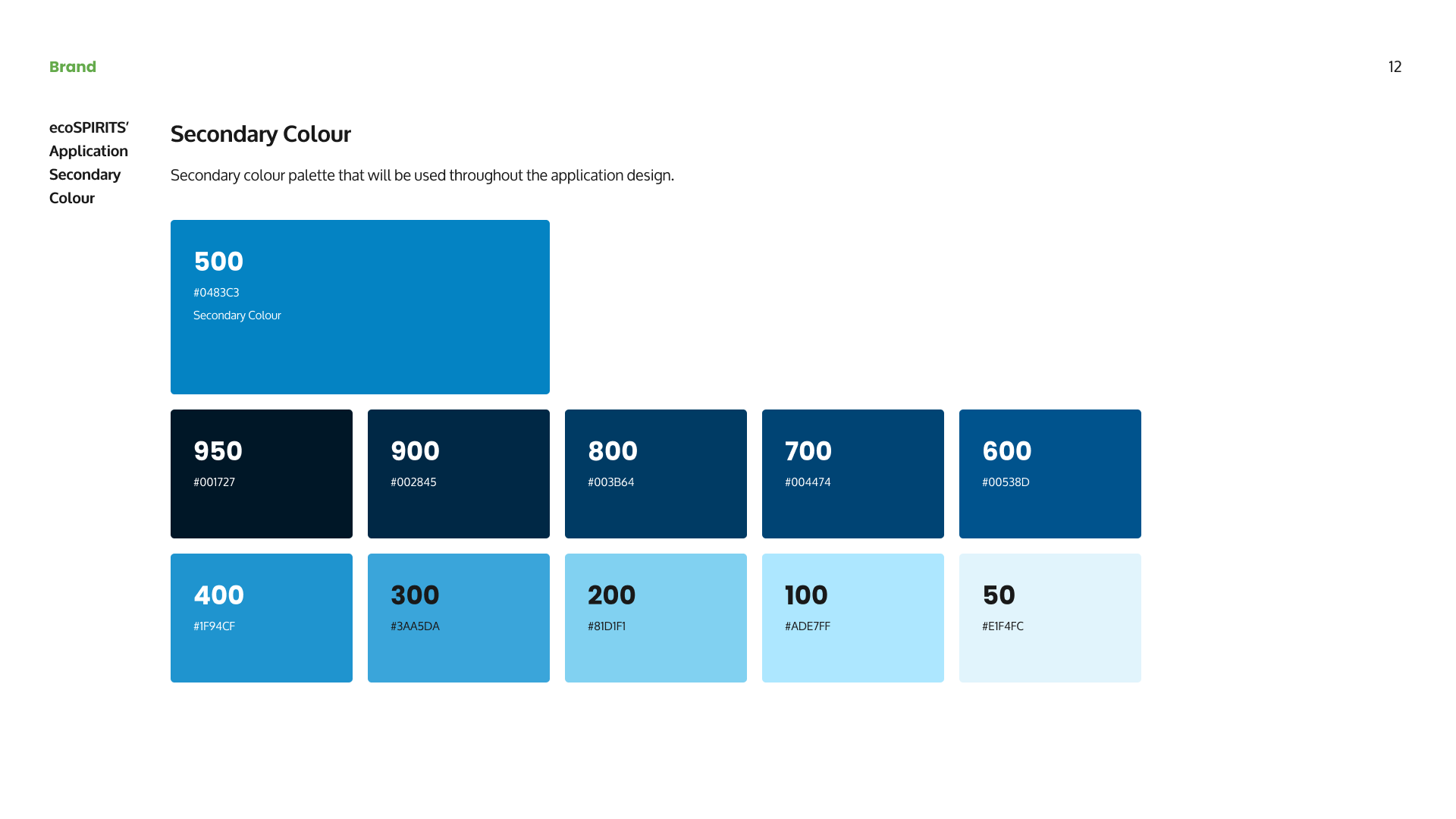
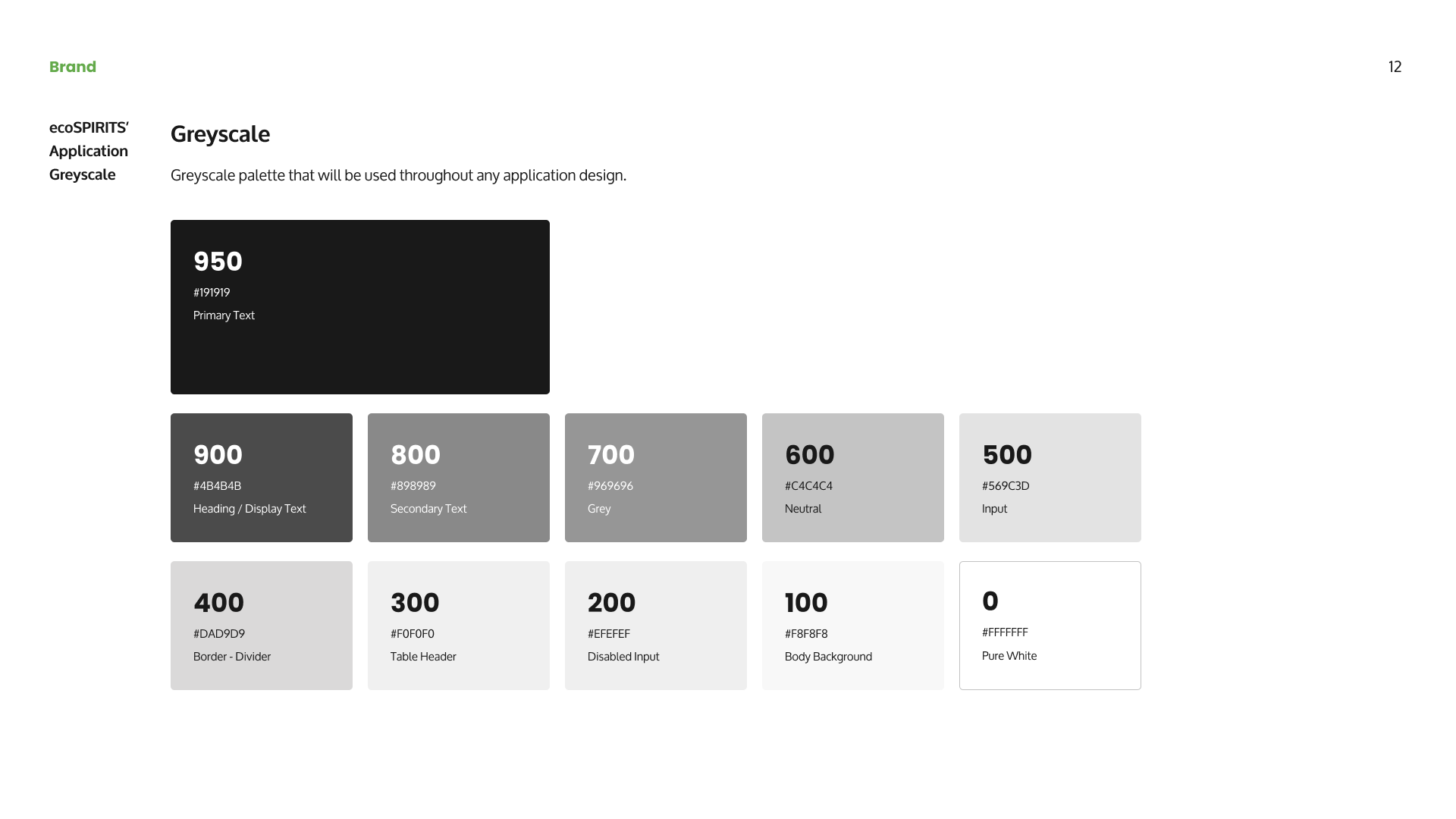
In collaboration with Agile Labs, I contributed to developing a new design system in Figma. Grounded in ecoSPIRITS' brand guidelines, we retained core brand colors while expanding the palette with complementary accent shades. We also introduced reusable components and design tokens using Material Design icon libraries to maintain scalable UI consistency.
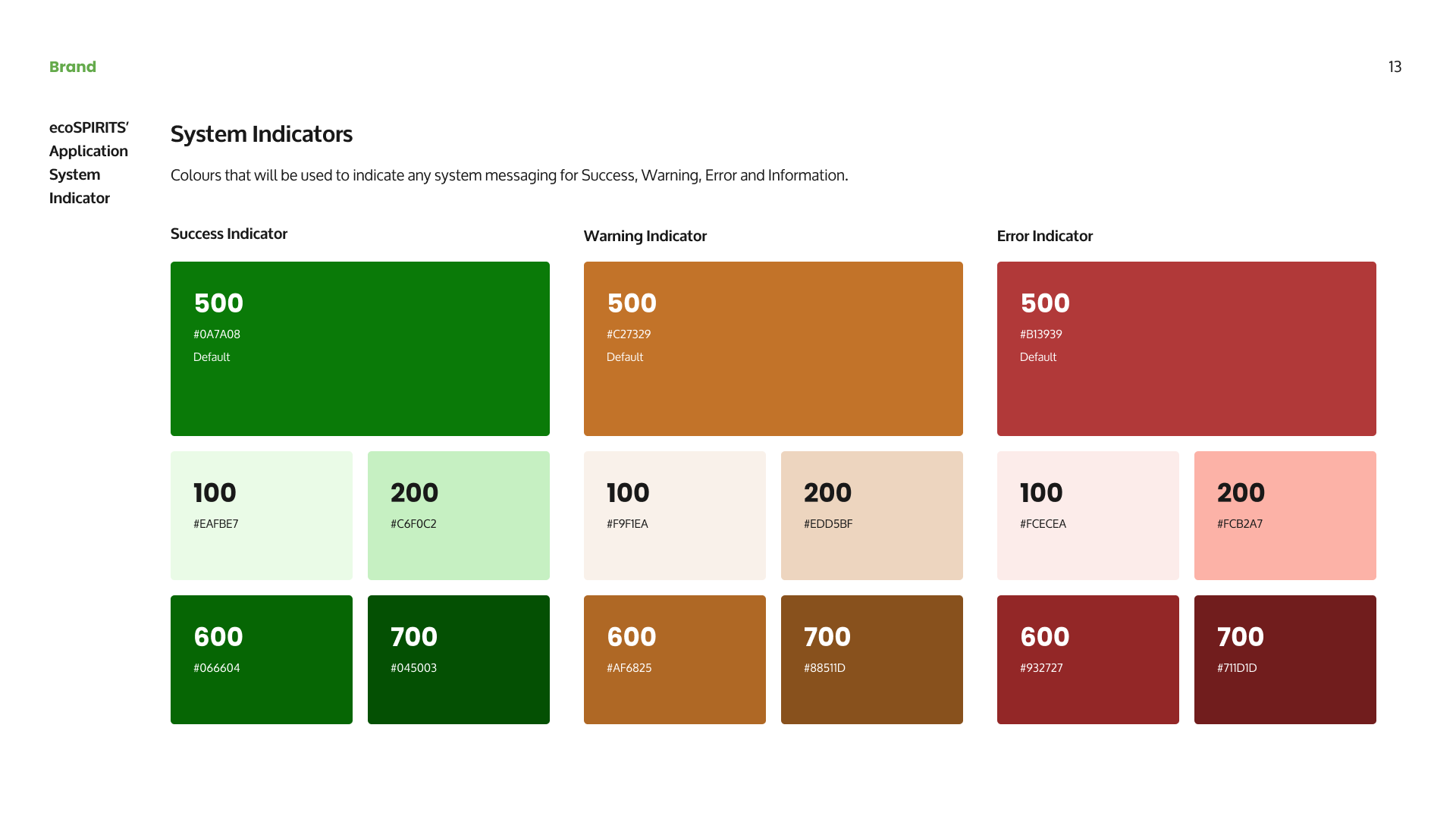
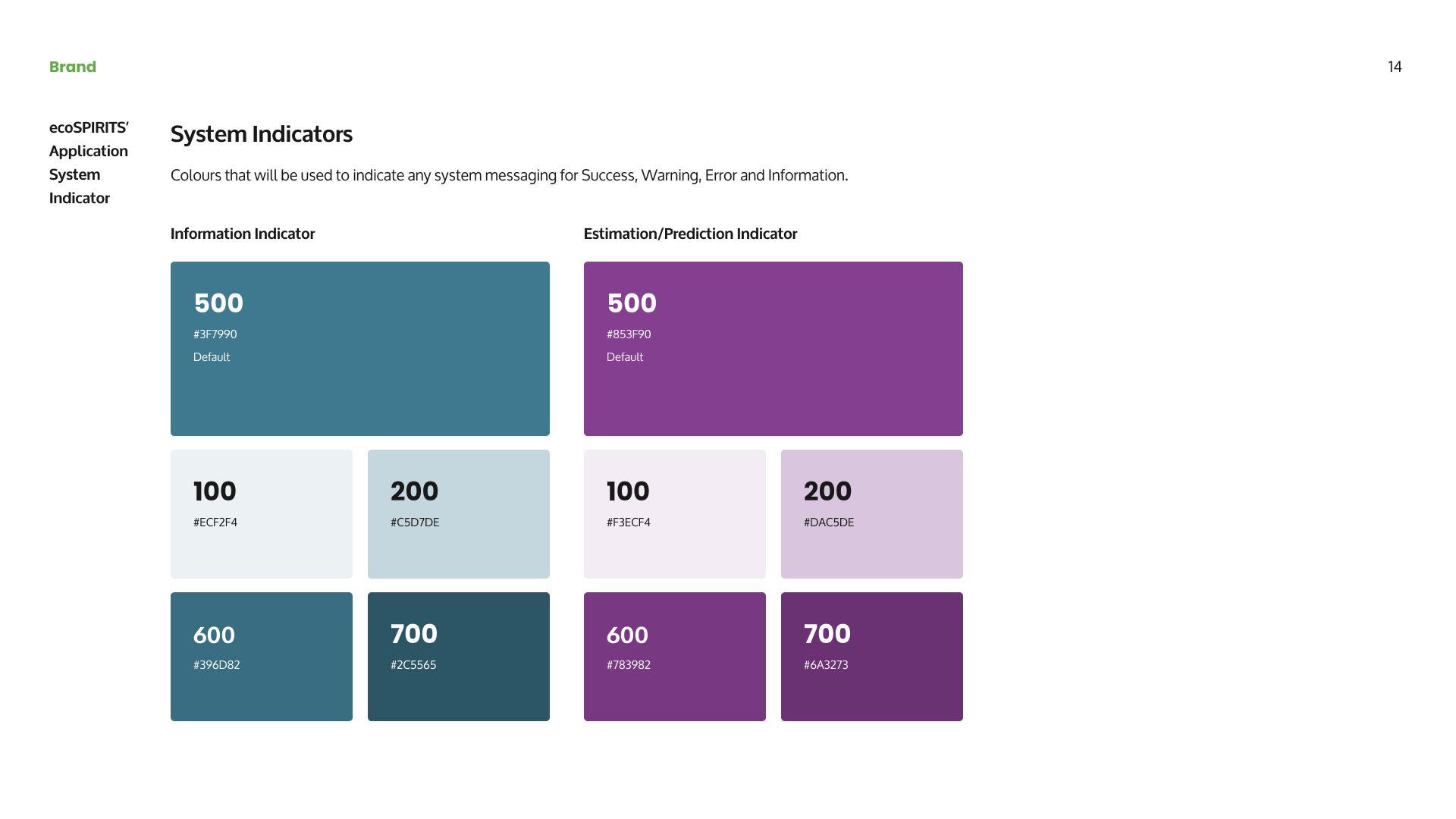
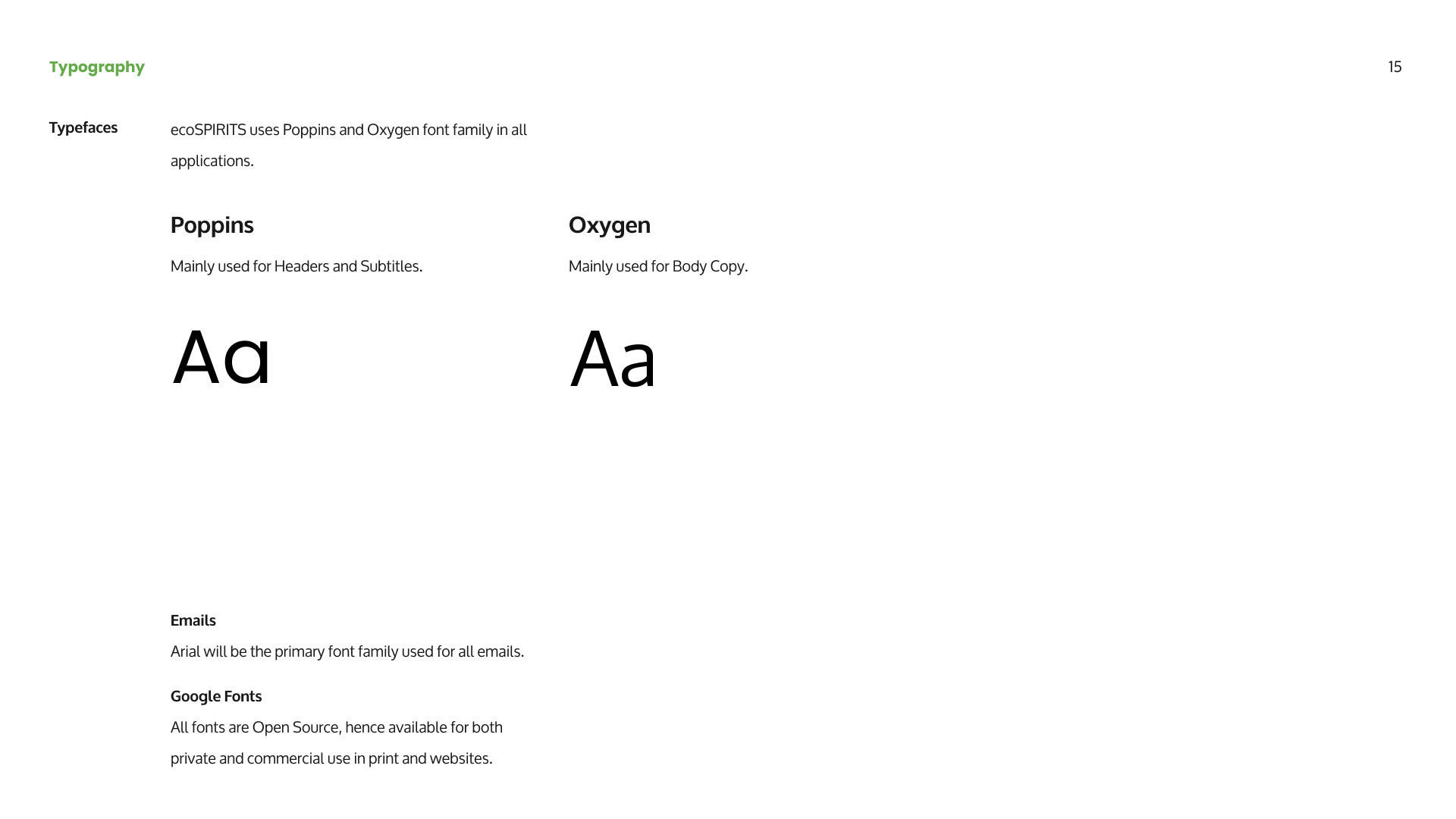
Building on mapped user journeys and low-fidelity sketches, I collaborated with Agile Labs to develop high-fidelity screen designs that served as the blueprint for development implementation.
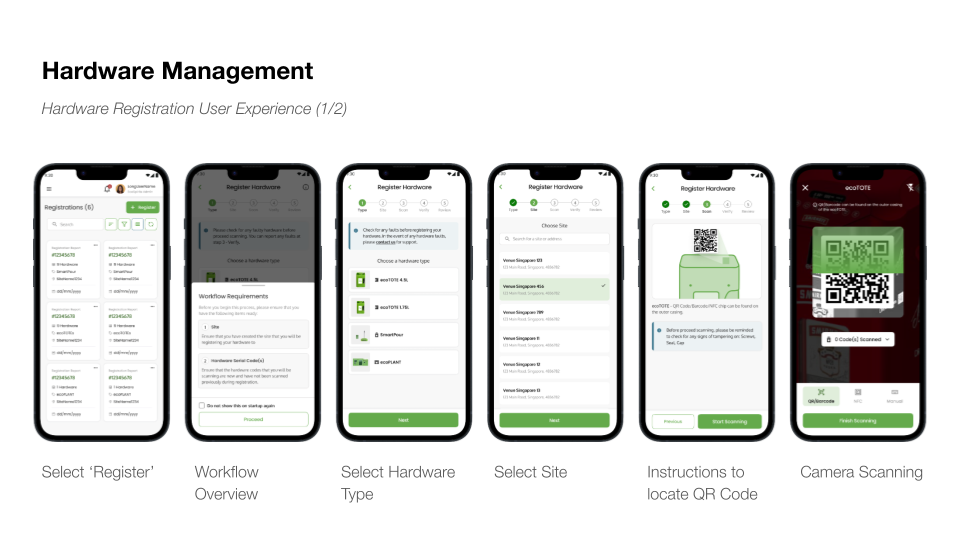
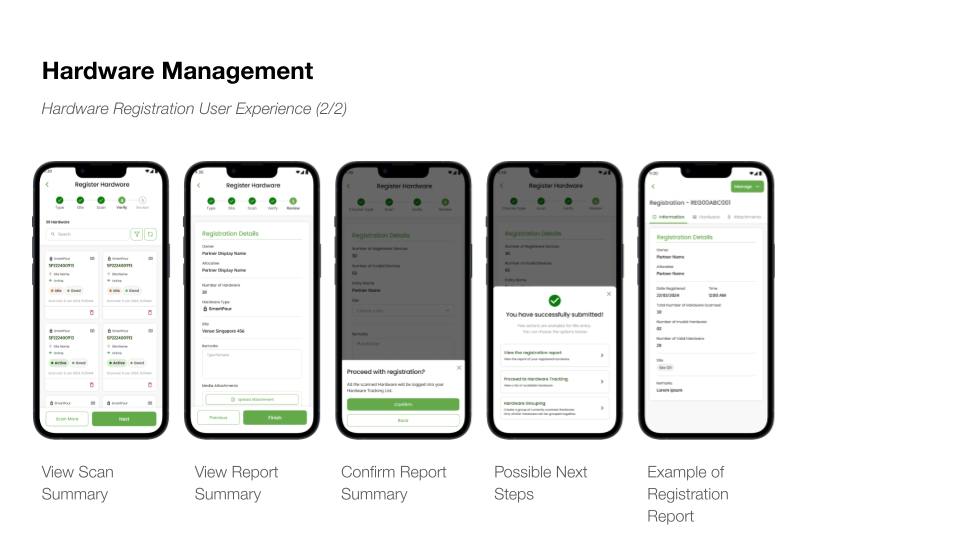
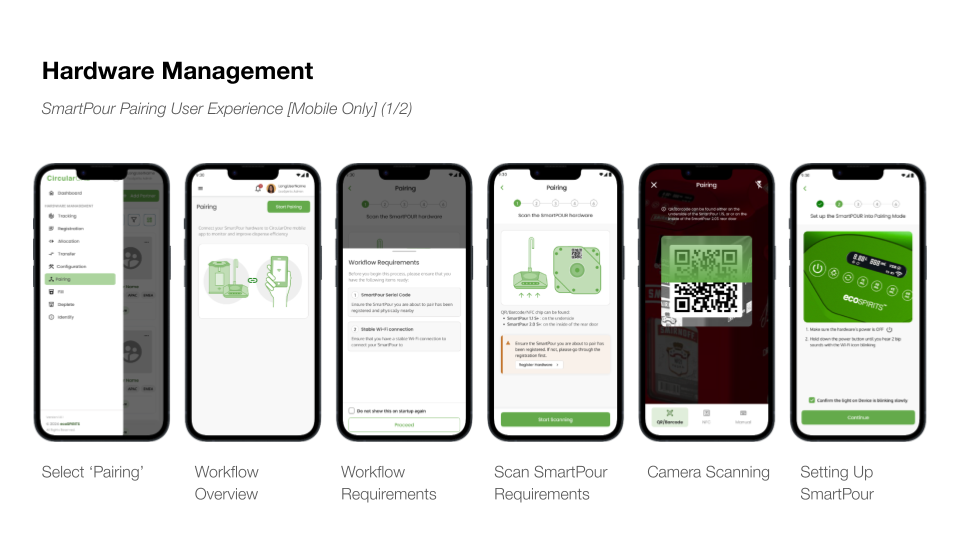
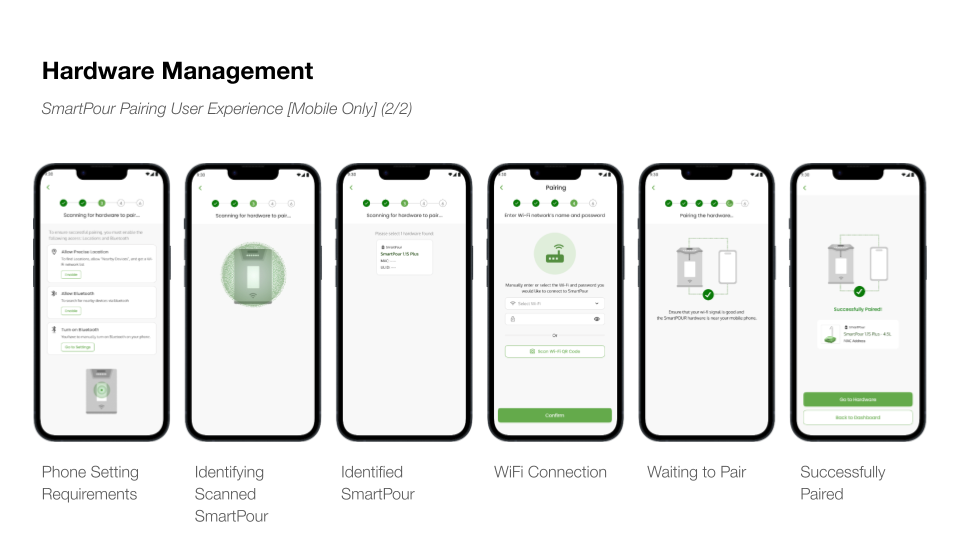
Testing was integrated into our deployment lifecycle within a Staging environment prior to production release:
Development Environment Testing
- Conducted initial functional validations with the Technical Product Manager to test core features, workflow completion, and UI responsiveness before broader testing.
Unmoderated Usability Testing (Staging)
- Operations Team members completed operational tasks in Staging. Feedback collected via recordings and issue reports highlighted early friction points, such as unclear scan instructions and missing data fields (e.g., Fill Operator Name).
We conducted a soft launch in select markets (including Mauritius), where team members provided hands-on training and gathered field feedback. While stakeholders appreciated having a functional platform to track ecoTOTE inventory, key friction points emerged:
Text-Heavy Instructions
- Users found it difficult to scan dense text instructions during field operations.
Unclear Workflow Prerequisites
- Users frequently reached final workflow steps before discovering missing prerequisites (such as unrecorded start/end fill times or missing site setups).
Language Barriers
- Non-English fluent markets experienced onboarding friction.
We implemented several UX enhancements to improve clarity across key workflows:
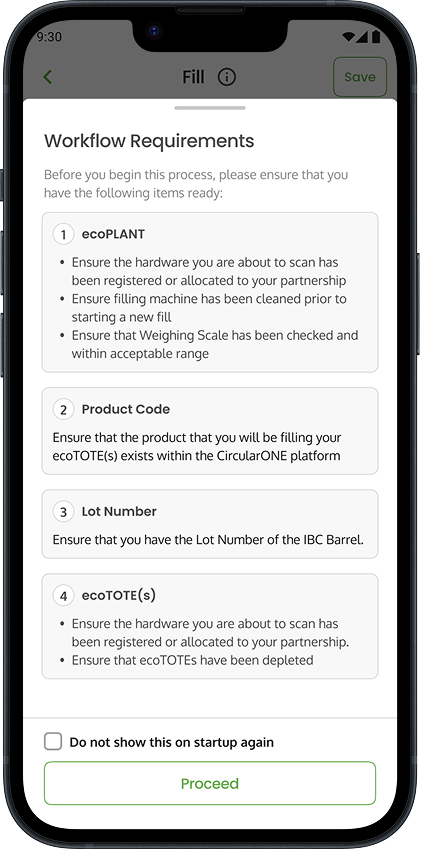
Workflow Requirements Slider
- Added a pre-workflow checklist slider to set clear prerequisites before starting tasks.
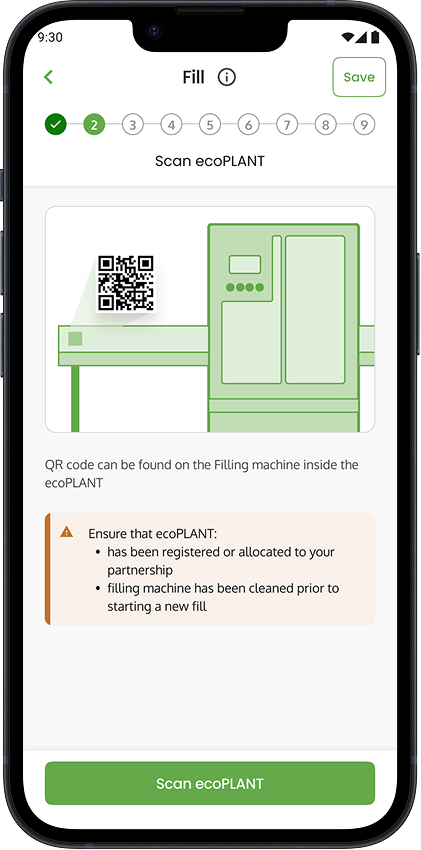
Summary Descriptions and Contextual Visuals
- Added concise step summaries and illustrations at scanning steps to visually show items to scan.
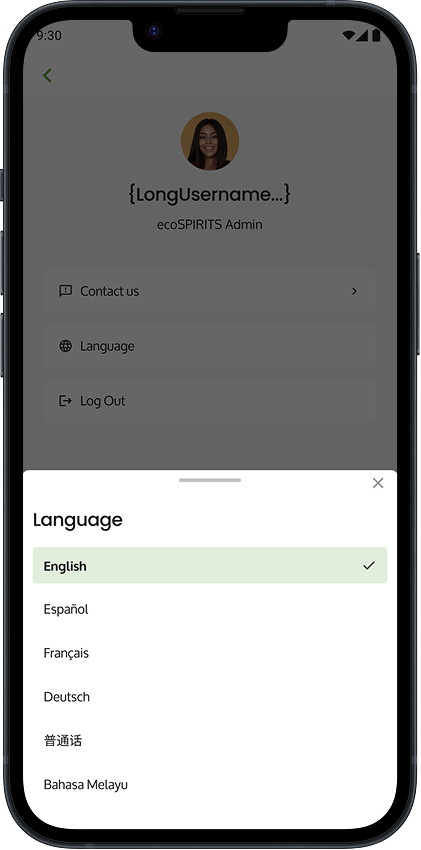
Language Selector
- Introduced multi-language support (Chinese, French, Spanish, Bahasa Melayu, Dutch, Portuguese) to streamline global onboarding.
Following the launch of CircularONE, we established a feedback escalation process:
Field Escalations
- Operations staff on the ground collected user feedback and escalated it directly to the product team.
Quantitative Analytics
- Integrated Google Analytics events to measure workflow completion rates and drop-off points.
MVP Approach
- The technical team evaluated incoming requests to classify them as new features, UX fixes, or post-launch deferrals.
If I were to revisit the CircularONE build from Day 1, I would refine the execution strategy in four key areas:
Discovery Over Ticket Execution
- Conduct upfront user research to validate pre-written JIRA tickets against root operational pain points rather than taking initial scope at face value.
Tri-Party Alignment Syncs
- Establish joint bi-weekly alignment sessions between Design, Operations, and Technical Project Managers to evaluate UX goals against backend feasibility simultaneously.
Accelerated Analytics Deployment
- Integrate Google Analytics during MVP 1 rather than MVP 3 to capture quantitative drop-off data earlier and prioritize high-friction fixes faster.
Setting Up Design System
- Conduct a comprehensive UI audit of core legacy components across all 3 platforms before drafting the initial Design System.


